
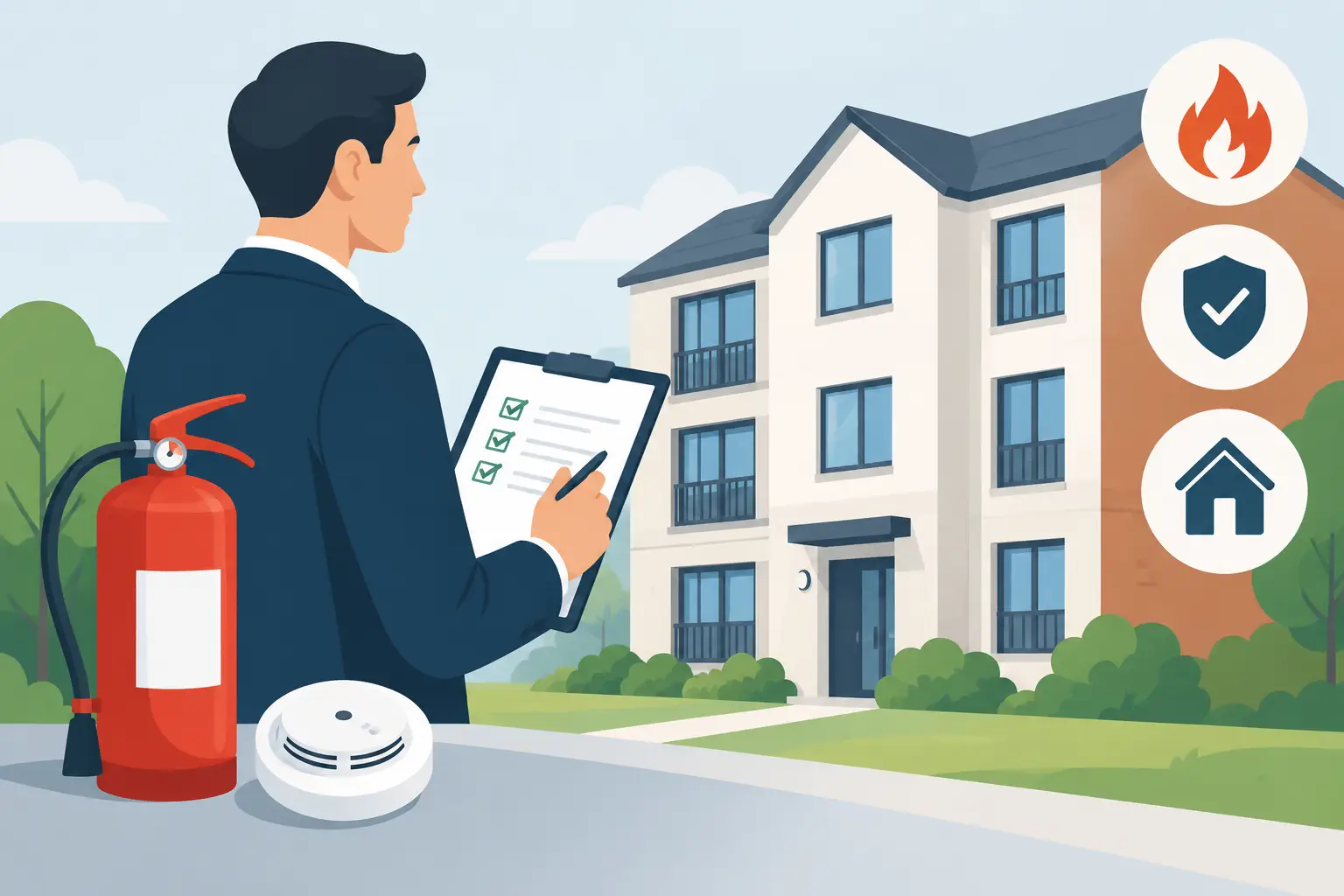
Fire Risk Assessment for Landlords Explained
A blocked escape route, a defective fire door or an overloaded extension lead can turn a manageable issue into a serious threat within minutes. A fire risk assessment for landlords provides a structured way to identify those risks before they harm tenants, damage property or lead to enforcement action.
For landlords of flats, houses in multiple occupation and mixed-use buildings, fire safety is not a paper exercise. It is a continuing responsibility to protect the people who live in the building and to show that reasonable precautions have been taken. The right assessment gives you a clear picture of where your property stands, what requires attention and which actions should take priority.
When does a landlord need a fire risk assessment?
The answer depends on the type of property and the areas under your control. In England, the Regulatory Reform (Fire Safety) Order 2005 generally applies to the common parts of blocks of flats, HMOs and buildings containing commercial premises. The person with control of those areas, often the landlord, freeholder, managing agent or another appointed responsible person, must ensure that a suitable and sufficient fire risk assessment is completed and kept under review.
This covers areas such as entrance halls, communal corridors, stairwells, plant rooms, bin stores and shared escape routes. It can also apply to workplace areas in a mixed-use building, such as a shop beneath residential flats.
A single rented house or flat with no shared common areas may not require a formal fire risk assessment under the Fire Safety Order in the same way. However, landlords still have duties under housing legislation and must provide safe accommodation. Assessing fire hazards remains sensible practice, particularly where the layout is unusual, the property has vulnerable occupants or previous alterations could affect escape.
For HMOs, the expectations are often higher. Licensing conditions, local authority requirements and the layout or occupancy of the building may call for more extensive fire precautions. This is why a generic checklist is rarely enough. The assessment should reflect the premises, its occupants and how it is actually managed.
What a fire risk assessment for landlords examines
A professional assessment considers both the chance of a fire starting and the ability of occupants to escape safely if one does occur. It is not limited to spotting obvious hazards. It also considers how the building’s construction, management arrangements and fire-protection measures work together.
Sources of ignition and fuel
The inspection will look for ignition sources such as faulty electrics, cooking equipment, heaters, smoking materials, boilers and poorly managed maintenance work. It also considers combustible materials, including rubbish in communal areas, stored furniture, flammable liquids and excessive clutter on escape routes.
Good housekeeping is often one of the simplest controls, but it must be maintained. A hallway kept clear on the day of inspection is not enough if deliveries, bicycles, prams or refuse regularly obstruct the route used by residents to leave the building.
People at risk
A thorough assessment considers who may be affected by a fire. This includes tenants, visitors, contractors and anyone who may need additional help to escape, such as older residents, young children, disabled occupants or people unfamiliar with the premises.
In a block of flats, the assessor will also consider whether the evacuation strategy is appropriate. Many purpose-built blocks operate a stay-put policy, but that policy depends on suitable compartmentation, sound fire doors and the original design of the building. It should never be assumed without checking whether the building supports it.
Escape routes, alarms and emergency lighting
Escape routes should be usable, adequately protected and appropriate for the number of people who may need them. The assessment considers travel distances, signage, lighting, final exits and whether routes are kept clear and available.
Fire detection and warning arrangements must also suit the property. In a shared house, this may involve a linked fire alarm system with detectors in prescribed locations. In a block of flats, the arrangements can be different and must be compatible with the building’s fire strategy. Installing more alarms is not always the answer - unsuitable systems can lead to false alarms, poor resident response and unnecessary disruption.
Fire doors and compartmentation
Passive fire protection is central to safe evacuation. Fire-resisting walls, floors, service risers and fire doors are designed to contain smoke and fire long enough for people to escape and for the emergency services to respond.
Common weaknesses include damaged door leaves, missing smoke seals, excessive gaps, unsuitable hinges, wedged-open doors and unprotected openings around pipes or cables. These issues can be easy to overlook, yet they may seriously compromise the building’s fire separation. Where concerns arise, a dedicated fire door assessment or compartmentation survey may be the appropriate next step.
Your responsibilities do not end when the report arrives
A fire risk assessment should produce a practical action plan, not a document that sits unread in a folder. The responsible person should consider the findings, assign actions to the right people and address significant risks without delay.
Some actions may be straightforward, such as removing stored items from a communal staircase, replacing an unsuitable extinguisher or arranging a repair to a self-closing fire door. Others may need planning, quotations or specialist input, especially where building works are required to improve compartmentation or upgrade a fire alarm system.
The report should help you prioritise. Immediate life-safety issues need urgent attention, while lower-risk improvements can be programmed into a realistic maintenance plan. What matters is that risks are understood, decisions are recorded and actions are followed through.
You should also make sure that relevant information reaches tenants and managing staff. Residents need clear instructions on the building’s fire procedure, including what to do if they discover a fire and how to report defects. Staff or contractors with specific fire-safety duties should understand their role, whether that involves checking communal areas, testing emergency lighting or reporting damage to fire doors.
How often should landlords review the assessment?
There is no universal expiry date that makes every assessment automatically invalid. A fire risk assessment must be reviewed regularly and whenever there is reason to believe it is no longer valid. For many residential premises, an annual review is a sensible management measure, with a more detailed reassessment at intervals appropriate to the building and its risk profile.
A review is particularly necessary after a fire, a near miss, significant building alterations, a change in occupancy, a new use of part of the premises or changes to the people at risk. Repeated faults, such as fire doors being damaged or communal routes being blocked, also indicate that management controls may need to be strengthened.
Higher-risk or more complex buildings may require closer oversight. For example, a large HMO, an older converted property or a mixed-use building with complicated escape arrangements will usually need more frequent attention than a small, straightforward property.
Why professional assessment adds value
Landlords can identify many day-to-day hazards through regular inspections. However, fire safety involves legal duties, technical standards and building-specific judgement. The greatest risks are not always visible. A corridor may appear clear, while inadequate compartmentation above a suspended ceiling allows smoke to spread through the building. A fire door may look substantial but fail because its closer does not shut it fully into the frame.
A competent fire safety consultant brings an independent view and helps translate technical findings into proportionate actions. This is valuable where several parties share responsibility, such as freeholders, leaseholders, managing agents and commercial tenants. Clear evidence of assessment, review and completed actions can also support your position if questions are raised by insurers, local authorities or the fire and rescue service.
For landlords across Kent, East Sussex and West Sussex, Kent and Sussex FRA provides comprehensive, practical assessments that focus on real safety outcomes as well as compliance. The aim is not to create unnecessary work, but to identify what the premises genuinely needs to protect occupants and meet the required standard.
A safer property starts with clear action
Fire safety is most effective when it becomes part of routine property management: inspect, assess, act and review. If you are unsure whether your current arrangements are suitable, or if your building has changed since it was last assessed, arrange a professional review. A clear, tailored action plan gives you a sound basis for protecting tenants, preserving your property and carrying out your responsibilities with confidence.


Comments