
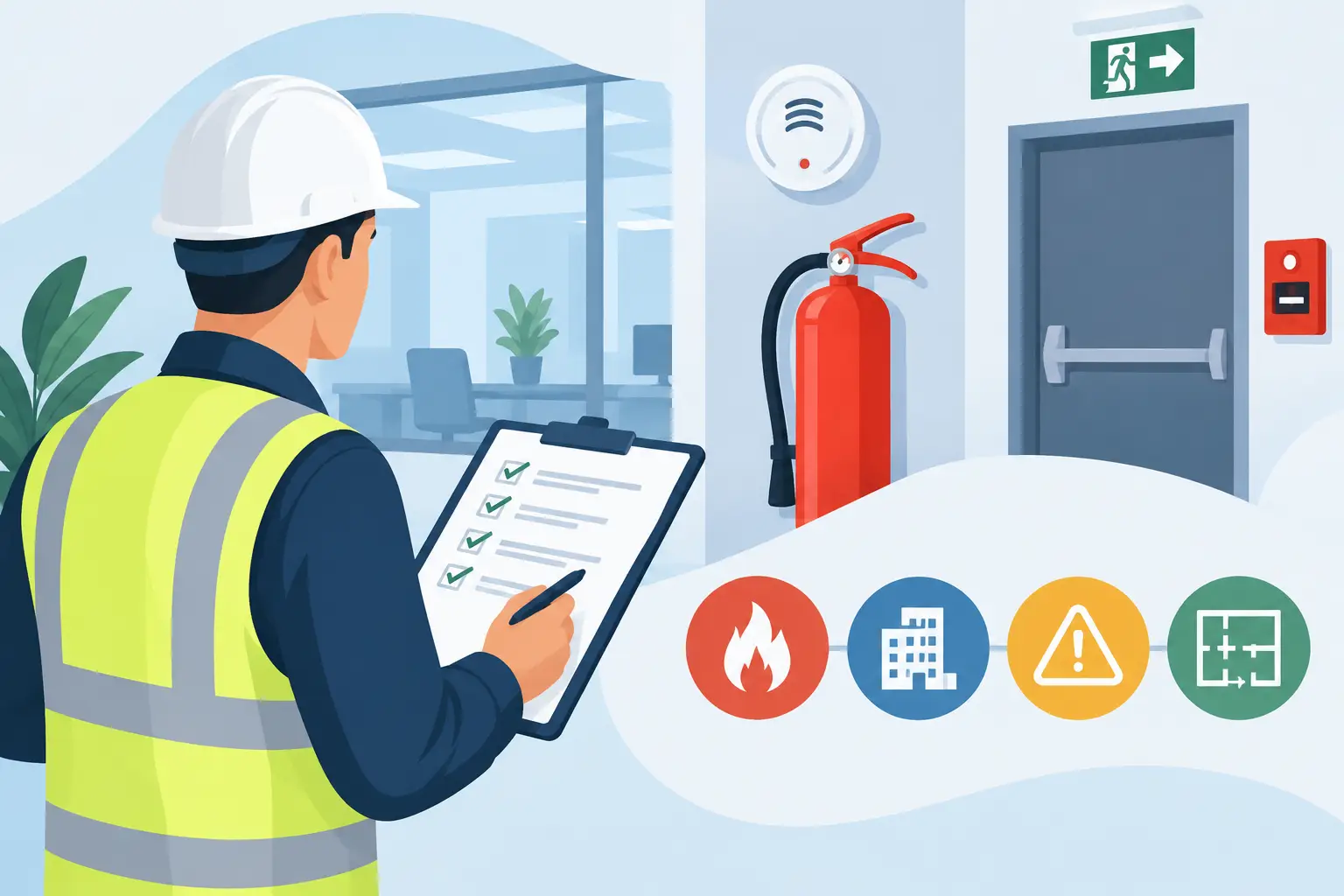
What Should a Fire Risk Assessment Include?
A fire door held open with a wedge, an overloaded extension lead in a stockroom, or an escape route narrowed by stored boxes can turn a manageable incident into a life-threatening emergency. That is why asking what should a fire risk assessment include is not simply a compliance exercise. It is the starting point for protecting occupants, preserving property and giving the responsible person a clear plan for managing fire safety.
For most workplaces, residential blocks and mixed-use premises in England, a suitable and sufficient fire risk assessment should identify the risks present, assess who may be affected, evaluate the controls already in place and set out practical actions where standards need to improve. It should be specific to the building and how it is used, rather than a generic checklist filed away after inspection.
What Should a Fire Risk Assessment Include in Practice?
A professional assessment considers both the likelihood of a fire starting and the consequences if it does. Under the Regulatory Reform (Fire Safety) Order 2005, the responsible person must take general fire precautions so far as reasonably practicable. The assessment is the evidence base for those precautions.
The level of detail depends on the premises. A small, low-risk office will not require the same depth of analysis as a care home, large block of flats, warehouse or building with sleeping accommodation. However, a sound assessment should always address the same core areas: fire hazards, people at risk, protective measures, management arrangements and a prioritised action plan.
Fire hazards and ignition sources
The assessment begins by identifying anything that could start a fire. Common ignition sources include electrical equipment, charging stations, cooking facilities, heaters, hot works, smoking materials and poorly maintained plant. The assessor will also consider the condition of electrical installations, the use of extension leads and whether equipment is being used as intended.
Identifying an ignition source alone is not enough. Its location, condition and proximity to combustible materials matter. For example, a portable heater may present limited risk in a clear, well-managed office, but a much greater concern where it is positioned beside stored paper, packaging or furnishings.
Fuel, oxygen and the way fire could spread
A fire needs fuel and oxygen, so the assessment examines combustible materials and the potential for fire or smoke to travel through the building. This includes waste storage, flammable liquids, stock, furniture, wall and ceiling finishes, and the housekeeping standards in work and circulation areas.
Passive fire protection is particularly significant. Fire-resisting walls, floors, doors and service penetrations are intended to contain fire and smoke long enough for people to escape and for emergency services to respond. Gaps around pipes and cables, damaged fire doors or unauthorised alterations to compartment walls can undermine that protection. Where these issues are identified, further fire door assessments or compartmentation surveys may be required to establish the extent of the defect.
People who may be at risk
A suitable assessment identifies everyone who could be affected by a fire, not only employees. This can include residents, visitors, contractors, members of the public, cleaners, lone workers and people working outside normal hours.
Particular attention should be given to anyone who may need additional support to evacuate. This may include people with reduced mobility, sensory impairments, temporary injuries, young people, older residents or those unfamiliar with the layout. In some premises, personal emergency evacuation plans may be appropriate. In others, the safer solution may be a managed evacuation strategy, refuge arrangements or changes to staffing and procedures. The right approach depends on the building, its occupants and the evacuation plan already in place.
Escape Routes, Fire Doors and Warning Systems
The assessment should establish whether people can detect a fire promptly, receive a clear warning and leave by a place of relative safety. Escape routes must be suitable for the number and type of occupants, kept clear, adequately lit and lead to a safe final exit.
The assessor will review the condition and availability of corridors, stairways, exits and external escape paths. Locked exits, missing signage, unsuitable storage, defective emergency lighting and poorly managed security arrangements can all delay evacuation. A route that looks acceptable during a quiet daytime visit may not be adequate during a busy shift, event or overnight occupation, which is why the way a premises operates is central to the assessment.
Fire doors should be checked as part of this review. Doors protecting stairways, corridors, flats or high-risk areas must close properly, provide the required resistance to fire and smoke, and not be altered in a way that compromises performance. A door closer disconnected for convenience can remove a critical line of defence.
The assessment should also review fire detection and alarm arrangements. This includes whether the system is appropriate for the premises, whether manual call points and detectors are suitably located, and whether testing, servicing and record keeping are taking place. Emergency lighting, fire extinguishers, fire blankets and other first-aid firefighting equipment should be considered in the same context. Equipment must be correctly selected, maintained and supported by suitable training, but it must never be relied upon as a substitute for safe evacuation.
Fire Safety Management and Daily Controls
Even well-designed fire precautions can fail if nobody manages them. A fire risk assessment should therefore examine the day-to-day arrangements that keep controls effective.
This includes the appointment of competent people, staff induction, refresher training, fire drills, testing routines, maintenance records, contractor controls and arrangements for reporting faults. It should also consider how changes are managed. Refurbishment work, new machinery, a change in occupancy, increased storage or altered working hours can all change the fire risk and may require the assessment to be reviewed.
For multi-occupied buildings, responsibilities should be clearly understood. Landlords, managing agents, tenants and employers may each have duties over different parts of the premises. Uncertainty can leave serious issues unresolved, particularly around common areas, fire doors, alarm systems and shared escape routes. Clear allocation of responsibility is a practical safety measure, not an administrative detail.
The action plan: findings must lead to action
A useful assessment does more than describe shortcomings. It records the significant findings and provides an achievable action plan. Each recommendation should explain what needs to be done, why it matters, who is responsible and the appropriate timescale.
Actions are normally prioritised according to risk. Immediate concerns might include blocked exits, disabled alarm systems, unsafe electrical equipment or serious breaches in fire compartmentation. Other improvements, such as replacing signage or updating training records, may be important but less urgent. This distinction helps duty holders direct resources where they will make the greatest difference to life safety.
A clear action plan also creates an auditable record of decisions and progress. If remedial work cannot be completed immediately, the responsible person should understand any interim controls required, such as removing combustibles, increasing checks or restricting access to an area.
When Should the Assessment Be Reviewed?
A fire risk assessment is a live management document. It should be reviewed regularly and whenever there is reason to believe it is no longer valid. A fire, near miss, enforcement concern, significant alteration, change of use, increase in occupants or material change to vulnerable residents should trigger a prompt review.
There is no single review interval that suits every building. Lower-risk premises may need a straightforward annual review alongside periodic full reassessment, while complex or high-risk sites may require more frequent review. The key question is whether the assessment still reflects the premises as they are today, not as they were when the document was first written.
For responsible persons across Kent, East Sussex and West Sussex, an independent assessment can provide clarity where responsibilities, building changes or technical fire protection measures are difficult to interpret. Kent and Sussex FRA provides practical, compliance-focused assessments that identify the issues that matter and set out clear safety actions.
A fire risk assessment should leave you with more than a document. It should give you confidence that hazards are understood, people can escape safely and the next actions are clear enough to be completed without delay.


Comments