
When Is Compartmentation Inspection Needed?
A fire can spread through a building long before it becomes visible in a corridor or stairwell. Gaps around pipes, unsealed service risers, damaged fire-stopping and altered ceilings can all compromise the fire-resisting walls and floors intended to contain it. That is why the question of when is compartmentation inspection needed matters to every responsible person managing a commercial, residential or mixed-use premises.
A compartmentation inspection, often called a compartmentation survey, examines whether the building’s passive fire protection is likely to perform as intended. It provides evidence of weaknesses that may not be apparent during a routine walk-through and helps turn fire-safety responsibilities into clear, practical actions.
What a compartmentation inspection checks
Compartmentation divides a building into fire-resisting sections. The purpose is to slow the spread of fire and smoke, protect escape routes and give occupants time to leave safely. It can also support firefighting operations and reduce damage to the wider property.
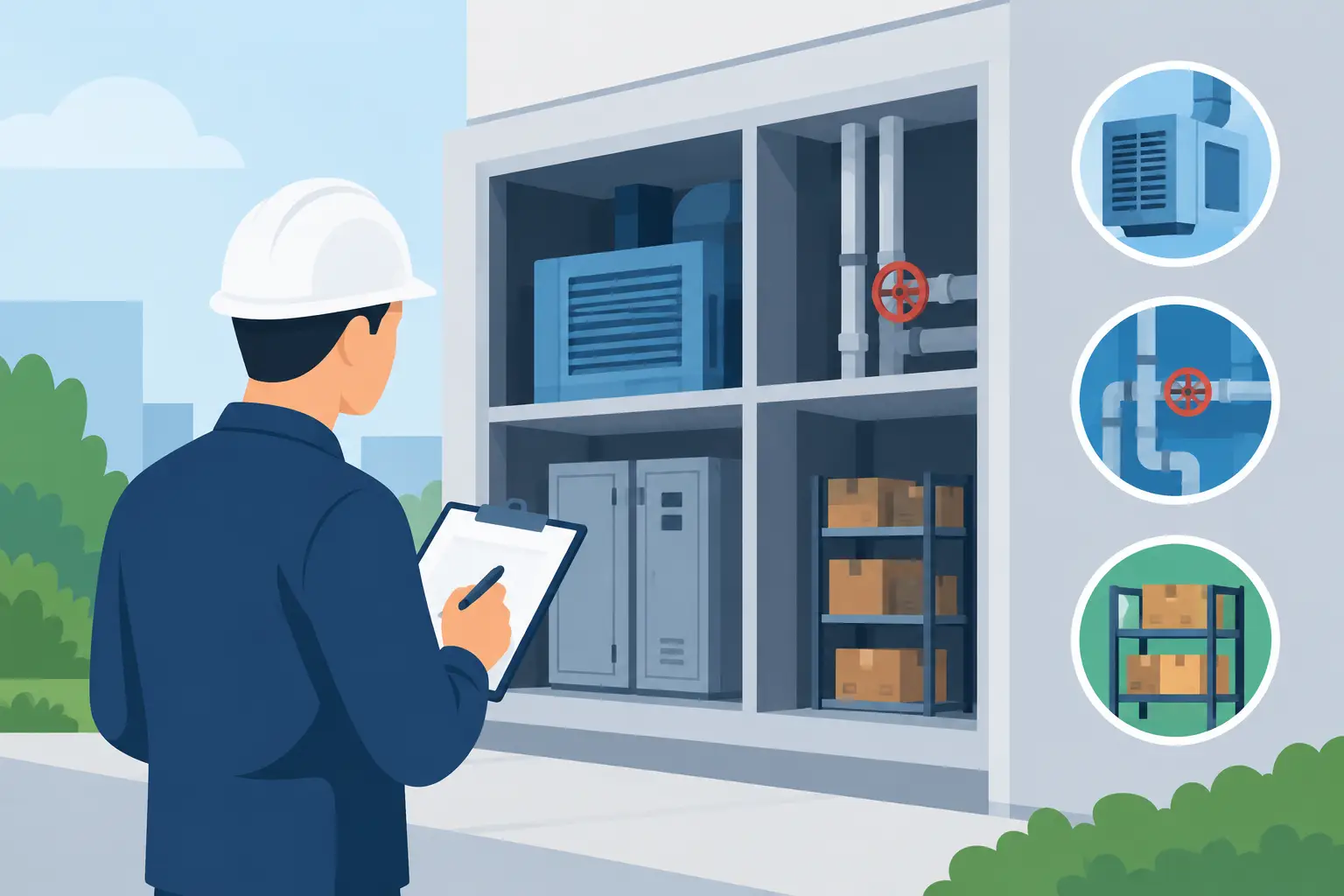
An inspection considers the condition and continuity of fire-resisting walls, floors and ceilings, along with the penetrations and junctions that pass through them. Typical areas include service risers, roof voids, ceiling voids, electrical and data cabling, pipes, ductwork, fire dampers, access hatches and the fire-stopping installed around these elements.
The survey should assess more than whether a sealant or board is present. A suitable inspection considers whether the construction appears appropriate for the opening, whether it is damaged or incomplete, and whether it is likely to maintain the required fire resistance. The exact scope depends on the building, its age, construction, occupancy and accessibility.
When is compartmentation inspection needed?
There is no single universal interval that applies to every building. A survey is needed when the fire risk assessment, building history or visible condition indicates that the integrity of compartment lines cannot be confidently established. For many duty holders, it is particularly appropriate at key points in a building’s life rather than as a purely calendar-based exercise.
When a fire risk assessment identifies uncertainty
A fire risk assessment may reveal signs of compartmentation failure, such as unsealed service penetrations, holes in riser walls, missing ceiling sections or poorly protected openings. It may also identify that fire separation cannot be confirmed because voids, risers or concealed areas have not been inspected.
In these circumstances, a more detailed compartmentation inspection is a proportionate next step. A fire risk assessment is not normally a destructive investigation. It identifies risk and determines where further examination is necessary; a compartmentation survey investigates the construction in greater detail and records the defects found.
After refurbishment, fit-out or building work
Refurbishment is one of the most common triggers. New plumbing, ventilation, electrical systems, data cables and security equipment often pass through fire-resisting walls and floors. If the resulting openings are not properly fire-stopped, a previously effective compartment line can be compromised.
This applies to major projects as well as smaller works. A single cable installation through a protected corridor wall may require suitable fire-stopping. Where several contractors have worked over time, the risk of incomplete or incompatible products increases. An inspection after works provides reassurance that hidden fire-safety measures have not been overlooked.
When the use or layout of the building changes
A change in occupancy, layout or operation can alter the fire strategy. For example, an office converted into a house in multiple occupation, a shop with residential accommodation above, or a warehouse with new internal rooms may need different levels of separation and protection.
The same is true where sleeping risk is introduced, where vulnerable occupants are present, or where evacuation may be more complex. A compartmentation inspection helps determine whether the existing fire-resisting construction remains suitable for the building’s current use, rather than the use for which it was originally designed.
In older, altered or poorly documented buildings
Older premises often contain a history of repairs and alterations that are not recorded. Original drawings may be unavailable, while ceilings, boxing and finishes can conceal defects. In some cases, materials that were considered acceptable when installed may no longer provide confidence when assessed against the current fire strategy.
A survey is particularly valuable where there is uncertainty about the construction of separating walls and floors, the protection of service routes or the continuity of fire barriers in roof and ceiling voids. The aim is not to assume that every older building is unsafe. It is to establish the condition honestly and prioritise action where it will make the greatest difference.
Following fire, water damage or accidental damage
Fire, impact, leaks and maintenance work can damage fire-stopping and fire-resisting linings. Even where the building appears operational, the performance of concealed protection may have been affected.
An inspection should be considered after any event that could have disturbed compartment lines, particularly in risers, plant rooms, protected corridors and escape stair enclosures. Prompt assessment can prevent temporary damage from becoming a long-term compliance issue.
Before acquiring, leasing or taking responsibility for a property
Building owners, landlords, managing agents and incoming occupiers need a clear picture of fire-safety liabilities before taking on a premises. A compartmentation survey can identify remedial costs, access constraints and risks that may otherwise emerge after occupation.
For residential blocks and mixed-use properties, this due diligence can be especially useful where management responsibility is changing. It supports informed budgeting and gives the responsible person a documented basis for planning remedial work.
Legal duties and the need for evidence
In England and Wales, the Regulatory Reform (Fire Safety) Order 2005 requires the responsible person to take general fire precautions, including measures to reduce the risk of fire and ensure safe escape. The appropriate precautions depend on the premises and its risks, but effective compartmentation is often central to a building’s fire strategy.
For higher-risk and more complex residential buildings, wider building-safety duties may also apply. Regardless of the specific regime, the practical expectation is clear: duty holders should understand the condition of the fire-safety measures under their control and act where deficiencies are identified.
A compartmentation inspection does not remove every risk or guarantee compliance by itself. It does, however, provide documented findings that can support a fire risk assessment, remedial programme and ongoing maintenance plan. Clear records are valuable if you need to demonstrate that concerns were identified, assessed and managed responsibly.
What happens during a compartmentation survey?
The level of inspection should be agreed around the building and the reasons for the survey. A visual inspection may be sufficient in accessible areas where the construction is clear. In other cases, intrusive inspection is needed to view hidden voids, behind ceiling tiles, within risers or above suspended ceilings.
Intrusive work must be planned carefully. It can require access arrangements, liaison with occupants, temporary isolation of services and making-good after openings have been inspected. The trade-off is worthwhile where visual checks cannot confirm whether a fire barrier continues through concealed spaces.
A thorough report should identify the location of defects, explain the risk, include photographs where appropriate and set out prioritised recommendations. Findings may range from minor gaps requiring suitable sealing to significant breaches that demand urgent remedial work. The report should distinguish between immediate life-safety concerns and items that can be addressed through planned maintenance.
How often should inspections be carried out?
The right frequency is risk-based. A well-documented, lightly altered building may not need the same level of repeat survey as a complex property with frequent contractor activity, multiple service installations or a history of defects.
Rather than relying on an arbitrary interval, review the need for inspection when the fire risk assessment is reviewed, when works are proposed or completed, and whenever changes could affect passive fire protection. High-risk areas, such as service risers and areas subject to repeated alterations, may benefit from more regular checks.
Where defects have been repaired, consider whether quality checks and photographic evidence are needed before the work is closed out. Remedial fire-stopping is only effective if it is appropriate for the penetration, installed correctly and protected from subsequent disturbance.
Taking a proportionate, safety-first approach
Not every building requires an immediate intrusive survey of every hidden space. Equally, visible signs of poor fire-stopping should not be dismissed because the building has not had a fire. The right approach is proportionate: understand the building, consider its occupants and fire strategy, then investigate where assurance is lacking.
Kent and Sussex FRA provides compartmentation surveys across Kent, East Sussex and West Sussex, helping responsible persons identify weaknesses and plan clear, achievable safety actions. An informed inspection can protect occupants, preserve property and give you sound evidence that passive fire protection has received the attention it deserves.
If you are unsure whether recent works, a change of use or gaps identified in your fire risk assessment have affected compartmentation, seeking professional advice early is often the most practical way to prevent a manageable issue becoming a serious fire-safety failure.


Comments