
How to Identify Fire Hazards in the Workplace: A Practical Guide
Updated: 30 minutes ago
Summary: Identify fire hazards by looking for ignition sources, combustible materials and conditions that could let fire or smoke spread. Inspect the premises as people use them, consider who might struggle to escape, and record each finding with a clear action. Review the assessment when work, occupancy or the building changes.
A toaster beside cardboard is not automatically a serious risk; an overloaded socket, unattended appliance and blocked exit can turn routine conditions into a dangerous combination. To identify fire hazards in your workplace, consider how ignition, fuel, the building layout and people’s needs interact. Our fire risk assessment steps checklist can help you organise your findings.
For a workplace in Dover, Maidstone or Brighton, deliveries, charging, hot works and shift handovers can change conditions after a tidy inspection. The responsible person must assess hazards and people at risk, evaluate risks, record findings, prepare an emergency plan, provide training and review the assessment, as set out in GOV.UK workplace guidance.
Follow possible sources of ignition and fuel
Consider a small kitchen where a microwave, toaster and packaging are all in use. Each item has a different role in a possible fire: the appliances could provide ignition sources, while packaging and waste could provide fuel. The risk depends on the circumstances, including equipment condition, placement and how quickly a fire could be noticed.
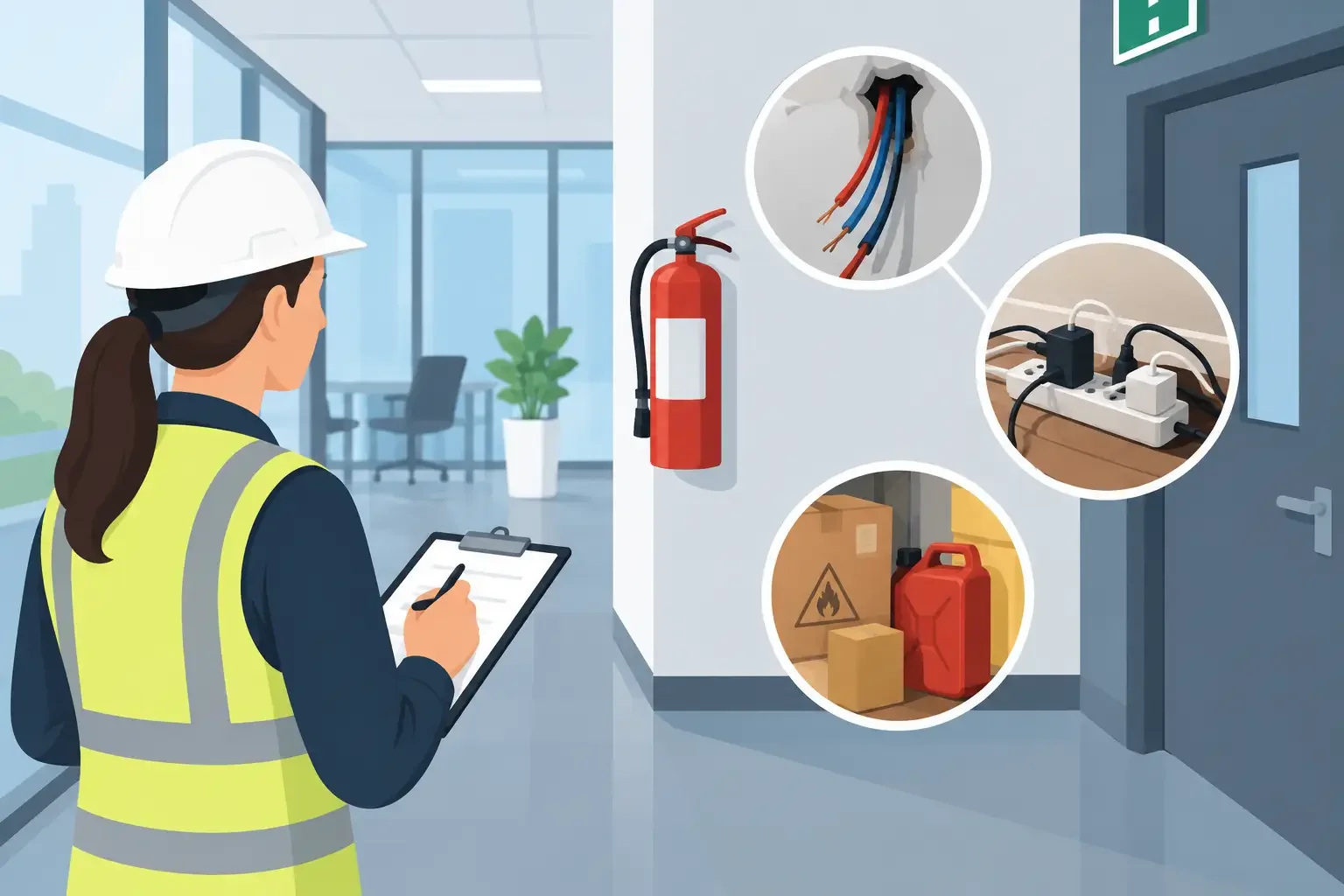
Look for heat, sparks or flames from electrical equipment, cooking appliances, heaters, boilers, machinery, smoking materials and hot works. Then check for combustible materials such as paper, cardboard, textiles, waste, furniture, aerosols and flammable liquids. The HSE fire safety guidance also directs workplace assessments to consider what could start a fire and which people may be at risk.
Pay attention to how hazards combine. A portable heater near stored stock, a damaged lead beneath a desk, or a build-up of grease near cooking equipment deserves closer attention than either the heat source or material considered alone. Check whether ignition sources are maintained and used safely, and whether combustible items are kept away from them.
Storage cupboards, plant rooms and electrical intake areas also warrant a look. They can contain equipment or services while becoming convenient places to leave unwanted materials. If you need help setting out the main elements of the assessment, read what a fire risk assessment should include.
Inspect the premises as people actually use them
A prepared, empty building can hide the conditions that arise during normal work. Walk the premises while staff, deliveries, cleaning or shift changes are taking place where practical. Observe temporary storage, charging equipment, doors held open for convenience and tasks that produce heat or sparks.
Follow the escape routes from occupied rooms to final exits. Look for stock, furniture, cleaning equipment or trailing leads that narrow or obstruct a route. Check that exits can be opened and that people unfamiliar with the site can recognise where to go. A route should work for the people who use it, not simply appear clear on a plan.
For organisations in Canterbury, Ashford and Eastbourne, a site visit should reflect the premises’ actual work and occupancy rather than a generic office checklist. Note the location and circumstances of each concern, including whether it is temporary, recurring or linked to a particular activity. This gives you a more useful basis for deciding what needs attention.
Check escape routes, fire doors and fire separation
A corridor may appear passable but still present a problem if stored items restrict movement or make an exit difficult to reach. Check corridors, stairways and final exits for obstructions, locking arrangements, signs and lighting. Consider whether visitors and people who may need assistance can follow the route safely.
Inspect fire doors for obvious damage and check that they close properly. Look for missing or damaged seals, missing closers, wedging and changes that could affect how the door performs. A door left open for convenience cannot protect an opening as intended unless it has a suitable automatic release arrangement.
Fire and smoke can also spread through gaps where services pass through walls or floors, or where fire-resisting construction has been altered. Some defects are concealed above ceilings or inside risers, so a visual walk-through may not reveal the full issue. Where you suspect weaknesses in fire separation, consider whether a more detailed compartmentation survey is appropriate.
Assess who could be harmed and how
Identifying a hazard is only one part of assessing risk. Consider who might be exposed, where they work or sleep, whether they would recognise a warning and how easily they could reach safety. Staff working alone, visitors, contractors, children, older people and people with mobility, sensory or cognitive impairments may face different challenges.
For example, a blocked route could affect a visitor unfamiliar with the building differently from a member of staff who knows another way out. A fire on an upper floor may have greater consequences where occupants rely on one staircase. Your assessment should connect the hazard to the people and activities in the premises, then consider whether existing precautions are suitable.
If you want an overview of the assessment process and its purpose, see what is a fire risk assessment. A written assessment should reflect the building and its occupants, rather than treating every visible issue as equal.
Record findings, assign actions and review them
A finding is useful when it tells you where the issue is, why it matters and what needs to happen next. Record its location, the hazard, who could be affected, the action required and who is responsible for completing it. Photographs can support written notes, but should not replace an explanation of the risk.
Prioritise concerns that could prevent escape or allow a fire to start and spread, such as obstructed exits or combustible materials stored beside an ignition source. Set an owner and target date for each action, then confirm when it has been completed. The fire risk assessment guidance from Buckinghamshire Fire and Rescue Service describes an assessment as a working document for understanding risks and keeping precautions under review.
Review your findings when the premises, work, occupancy or equipment changes. New storage arrangements, refurbishment, different working hours or a change of use can introduce hazards that were not present before. Regular checks of day-to-day controls also help you notice when an earlier action has slipped or a new concern has emerged.
Make hazard identification part of routine safety
To spot fire hazards early, look beyond individual objects and consider how ignition sources, combustible materials, building features and people’s needs connect. Walk the premises in use, record specific findings, address urgent issues and review controls when circumstances change. For sites across Kent, East Sussex and West Sussex, a careful, premises-specific assessment helps turn observations into practical action.
Arrange a fire safety assessment
If you are responsible for a workplace or other premises, a structured assessment can help clarify the hazards present and the actions to consider. We provide on-site consultations tailored to the organisation and premises, with bookings handled personally.

Our fire risk assessments are intended to identify hazards, evaluate risks and inform fire-prevention measures. Prices start at £130.00; please contact us to confirm the price for your premises. Explore our fire safety services to enquire about an assessment or discuss your requirements.
Frequently Asked Questions
What counts as a fire hazard in a workplace?
A fire hazard is a condition or activity that could start a fire or help it spread. Examples include damaged electrical equipment, unsafe storage near heat sources and obstructed escape routes.
How should you identify fire hazards in the workplace?
Inspect the premises as people use them, considering ignition sources, combustible materials, escape routes and the needs of occupants. Record each concern with its location and the action required.
Who should be considered during fire hazard identification?
Consider employees, visitors, contractors and anyone who may need additional help to recognise a warning or escape. Their location, familiarity with the building and ability to use the available routes all matter.
Why should fire doors and compartmentation be checked?
Fire doors and fire-resisting construction help limit the spread of fire and smoke. Damage, alterations, gaps or doors that do not close properly can compromise those protections.
When should you seek help with a fire risk assessment?
Consider competent support if the premises are complex, have changed, or contain fire separation issues that are difficult to assess visually. Our fire risk assessments are tailored to premises and intended to identify hazards and evaluate risks.


Comments