
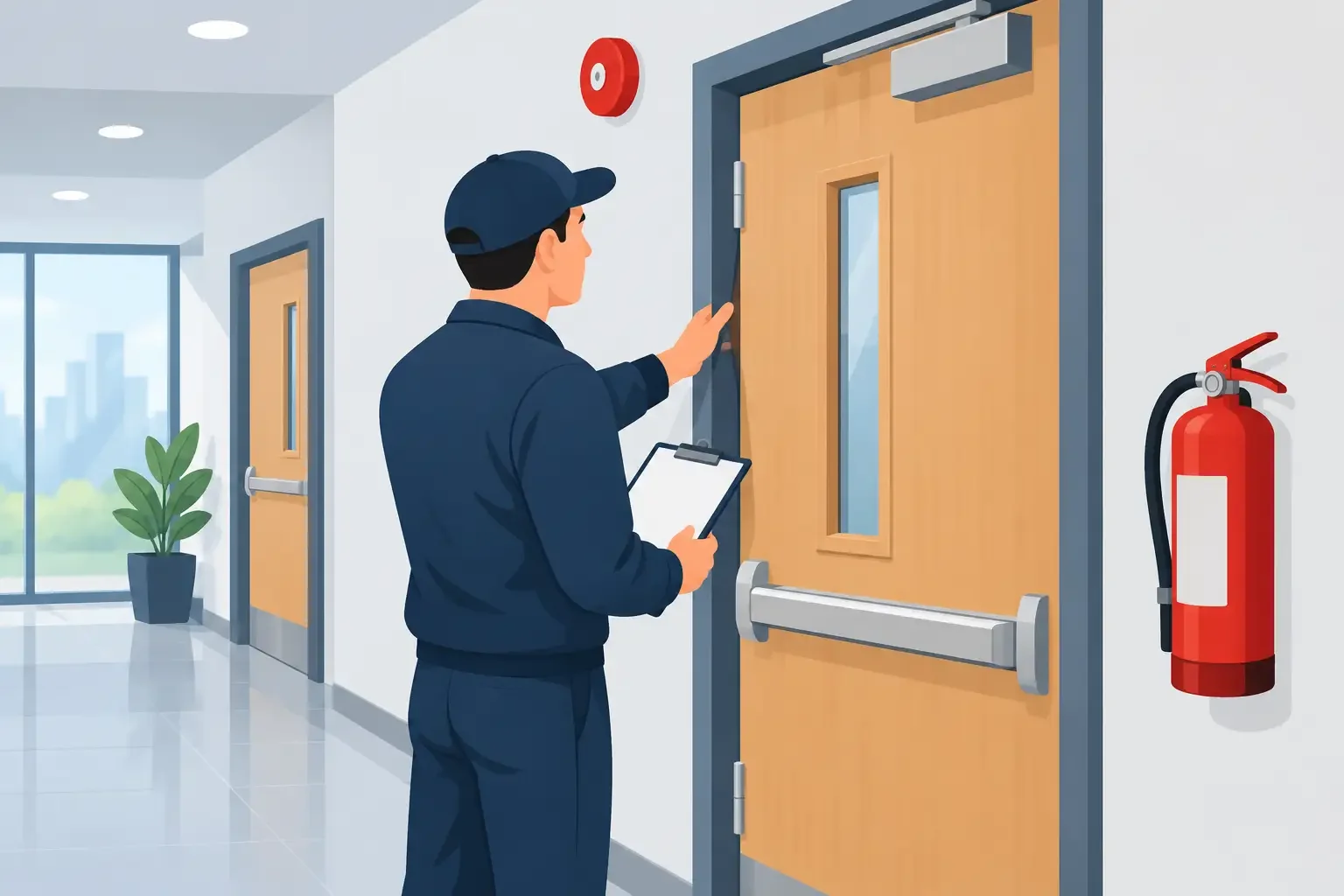
Fire Door Inspection Frequency: UK Checks and Legal Rules
Updated: 29 minutes ago
Summary: Fire door checks should follow the building’s risk and the doors’ condition. In qualifying multi-occupied residential buildings in England, specific rules require quarterly checks of communal fire doors and best-endeavours checks of flat entrance doors every 12 months. Elsewhere, establish a suitable routine through your fire risk assessment, and bring checks forward if a door is damaged or stops closing properly.
Could a fire door in your building close fully today, and would anyone notice if it could not? A door can look ordinary while damage, a faulty closer or an obstruction affects its ability to protect an escape route. Fire door assessments for your building can help you understand the condition and functionality of doors that need closer attention.
The right fire door inspection frequency depends on the building, the door’s role and how often it is used. The legal schedule is specific to certain residential buildings in England, rather than a single timetable for every building in the UK. For organisations across Kent and Sussex, from Dover to Brighton, a clear programme should distinguish routine checks from a more detailed assessment.
How often should fire doors be checked?
Start with the building’s legal duties, then consider the risks identified for each door. In England, qualifying multi-occupied residential buildings have set intervals for particular doors. Other premises should use their fire risk assessment to establish a proportionate inspection and maintenance routine.
Do not assume that one interval suits every door. A frequently used corridor door is exposed to different wear from a door to a rarely accessed room. Usage, damage history, changes to the building and the consequences of a door failing all matter when deciding how often to check it.
Checks should be brought forward if someone reports damage, the door is altered during maintenance, or it no longer closes as intended. A planned date is not a reason to leave an obvious fault unaddressed.
What do the fire door inspection requirements in England say?
Regulation 10 applies to multi-occupied residential buildings in England with two or more sets of domestic premises and a top storey more than 11 metres high. The Regulation 10 rules require checks of communal fire doors at least every three months. Responsible persons must also use best endeavours to check flat entrance fire doors at least every 12 months.
These duties apply to the buildings and doors described in the regulations. They do not establish a fixed inspection interval for every workplace, shop, school or residential building across the UK. Check which fire safety requirements apply to your premises and do not treat England’s specific residential schedule as a universal UK rule.
For flat entrance doors, record the steps taken to arrange checks, including attempts to gain access where entry was not possible. The government’s fire door guidance also explains that simple checks focus on obvious faults and effective closing. They do not replace periodic specialist assessment of whether doors remain adequate for the building’s fire risk.
What should a routine fire door check cover?
A routine check should look for visible faults and confirm that the door operates as intended. For a closing door, release it from open positions and check that it closes fully into its frame, overcoming the latch and any friction with the floor.
Look over the door leaf and frame for damage, holes, warping or signs of alteration. Check that hinges, handles, latches and closers are secure. Where fitted, inspect intumescent strips and smoke seals for damage, missing sections or obstruction.
Also check glazing, vision panels and hold-open devices where present. A door wedged open or blocked by furniture cannot close as intended. If a door is designed to remain open on an automatic device, follow the appropriate test procedure for that equipment rather than defeating it.
Government guidance describes these simple checks as a way to identify obvious defects, including damaged doors or seals and problems with self-closing. It advises that these checks do not require a specialist, but they are not a substitute for a more detailed assessment where concerns arise.
When should checks be more frequent?
Consider increasing routine checks where doors experience heavy use, repeated impact or frequent contractor activity. A door on a busy escape route, for example, is more likely to be affected by everyday wear than one that is seldom opened. If checks reveal recurring defects, review the interval and the cause rather than recording the same problem repeatedly.
Changes to the premises also warrant attention. Refurbishment, new flooring, changes in use or alterations to door hardware can affect how a door fits and closes. Arrange a check after work that could affect the doorset, and promptly investigate reports of a closing problem or visible damage.
A 2022 BWF fire door report describes regular inspection as a way to identify maintenance needs promptly. In practice, the important step is to connect each check to a clear record and timely action when defects are found.
Who should check fire doors, and when is an assessment needed?
Staff who know the premises can carry out simple visual checks and report faults. Give them clear instructions on what to look for, how to test closing safely and where to record issues. This helps make checks part of ordinary building management rather than an occasional task that is easy to overlook.
A more detailed assessment is appropriate when a door is damaged, has been altered, repeatedly fails a basic check or has uncertain status. An assessor can review the door’s compliance and functionality in the context of its location and role. Our guide to what counts as a fire door can also help clarify which doors may need attention.
When repairs or replacements are considered, the components must suit the door and its intended use. Avoid making changes based on appearance alone. Our explanation of fire door testing standards provides further context for understanding what test evidence addresses.
How should you record and manage checks?
Keep an inspection record that identifies each relevant door, its location, the check date, the findings and any action required. For regulated flat entrance checks in England, include the steps taken to arrange access when a check could not be completed.
Assign responsibility for following up defects and note when repairs are completed. A record that lists a fault without tracking action does not resolve it. Where a door will not close or has damage that could affect its role, arrange prompt attention and seek competent advice when the repair is unclear.
Review the programme when the building, occupants or pattern of door use changes. A fire risk assessment can help identify which doors are important to the safety strategy and where an additional assessment is appropriate. In Eastbourne, Canterbury and other local areas, the same principle applies: match the programme to the premises rather than relying on a generic calendar.
Set a fire door check schedule that fits your building
There is no single inspection interval for every UK building. Apply the specific legal checks where they cover your premises, then use your fire risk assessment, door use and condition to plan other checks. Record findings, follow up faults and bring checks forward after damage or changes. A clear, risk-based fire door check schedule helps you keep doors functioning as intended. For organisations across Kent, East Sussex and West Sussex, make the programme practical for the people responsible for carrying it out.
Arrange a Fire Door Assessment
If you are unsure whether your routine checks are identifying the right issues, a focused assessment can clarify the condition and functionality of your doors. It can also help you decide where further investigation or remedial action is needed.

We carry out on-site fire door assessments tailored to each organisation’s requirements. Our certified consultants check door compliance and functionality, then explain the findings so you can plan appropriate next steps. We handle bookings personally and provide support by phone or email. To discuss your premises in Kent, East Sussex or West Sussex, contact us about fire door inspection services.
Frequently Asked Questions
Is there one fire door inspection frequency for every UK building?
No. Specific statutory intervals apply to certain multi-occupied residential buildings in England, while other premises need a suitable programme based on their risks and door use. Do not assume that one timetable applies throughout the UK.
Who can carry out a routine visual check?
Staff responsible for the premises can carry out simple visual checks if they understand the procedure and know how to report defects. Seek a detailed assessment when the door’s condition, operation or suitability is uncertain.
What should you do if a fire door will not close?
Report the fault and arrange prompt attention rather than waiting for the next scheduled check. Keep the finding and follow-up action in your inspection record.
Do flat entrance doors need to be checked?
Some buildings in England have specific duties for flat entrance doors, as well as separate checks for communal doors. Elsewhere, consider relevant fire safety requirements and the building’s fire risk assessment.
Can a fire door assessment replace routine checks?
No. A detailed assessment and routine checks serve different purposes. An assessment can examine compliance and functionality, while regular checks help identify visible faults or operational problems between assessments.


Comments