
Fire Risk Assessment Checklist for Safer UK Premises
Updated: 5 hours ago
Summary: A useful fire risk assessment checklist records the premises and people at risk, identifies fire hazards, evaluates existing precautions and sets out actions to address weaknesses. It should reflect how the building is used, who may need help to evacuate, and whether warning, escape and fire protection arrangements work in practice. Review it when circumstances change.
A checklist only helps if it reflects the building and leads to practical action. For a clear starting point, see what a fire risk assessment should include, then check each finding against conditions on site.
For premises across Kent, East Sussex and West Sussex, the same basic questions apply, but the answers should match each building’s use. A shop, school, warehouse or shared residential area can have different hazards, occupants and evacuation needs. Treat a fire risk assessment checklist as a working aid, not a substitute for assessing those details.
What should a fire risk assessment checklist cover?
Begin by defining what is being assessed. Record the premises address, how the building is used, the areas included, the assessment date and who completed it. Note any shared spaces, inaccessible rooms or details that need further investigation, so the scope and limitations are clear.
Then use the checklist to guide a complete assessment rather than simply mark boxes. The GOV.UK five-step checklist, last updated on 20 January 2025, is intended to help with the simplest premises. It provides a useful structure, but a more complex building or activity needs an assessment that reflects its particular risks.
A practical fire risk assessment template should help you record what you found, where you found it and what needs to happen next. A “yes” or “no” answer alone rarely explains whether a control works or what action is needed. Add brief details that someone can use to verify the finding and follow up.
Premises and scope: address, use, floors, areas assessed and any exclusions.
People at risk: staff, visitors, contractors, customers and people who may need assistance.
Hazards and controls: what could start or spread a fire, and what precautions are already in place.
Protection and escape: warning arrangements, exits, escape routes, lighting, signs and relevant equipment.
Actions and review: the work required, who will complete it, when it is due and when the assessment will be reviewed.
Start with the people who use the premises
A building’s normal staffing pattern may not capture everyone who could be there during an emergency. Consider employees on different shifts, lone workers, contractors, visitors, customers and people unfamiliar with the layout. Include relevant differences between daytime operations and evenings, weekends or other periods of occupancy.
Consider whether anyone might have difficulty hearing an alarm, understanding instructions or reaching an exit without help. Record the arrangements needed, including who will provide assistance and how temporary staff or visitors will receive essential information. Do not assume that one evacuation arrangement will suit everyone.
Where a building has shared areas or more than one organisation with fire safety responsibilities, identify who controls each area and how arrangements fit together. In England, the GOV.UK guidance on workplace fire duties says the responsible person must carry out and regularly review an assessment, and keep a written record. If responsibility is shared, clarify who will resolve issues affecting common routes, alarms or other joint arrangements.
If you are unsure how the assessment fits into your wider duties, read more about fire risk assessment duties for responsible persons. Clear responsibilities make it easier to turn findings into action rather than leave them unresolved.
Trace hazards and how a fire could spread
Look at how ignition sources, combustible materials and the activities in each area interact. Check heating and cooking equipment, electrical items, smoking arrangements, hot work and contractor activity. Note packaging, waste, furnishings or other materials that could burn, particularly when stored near heat or ignition sources.
Record the location and circumstances of each hazard. “Improve housekeeping” is difficult to verify; “remove cardboard stored beside the heater in the rear stockroom” tells someone what to do and where. Consider whether dangerous substances, temporary work or changes in stock introduce risks that were not present during the last assessment.
During building work or refurbishment, contractors and temporary hot work deserve particular attention. The HSE’s construction fire guidance emphasises keeping fire precautions up to date and making sure people understand the arrangements. Apply the same practical discipline to the relevant work areas: identify hazards, agree controls and make responsibilities clear before work begins.
For a structured walk-through of likely ignition sources and other risks, use our advice on how to identify fire hazards in your building. The aim is to assess how hazards combine, not simply to make a list of objects.
Check whether precautions work in practice
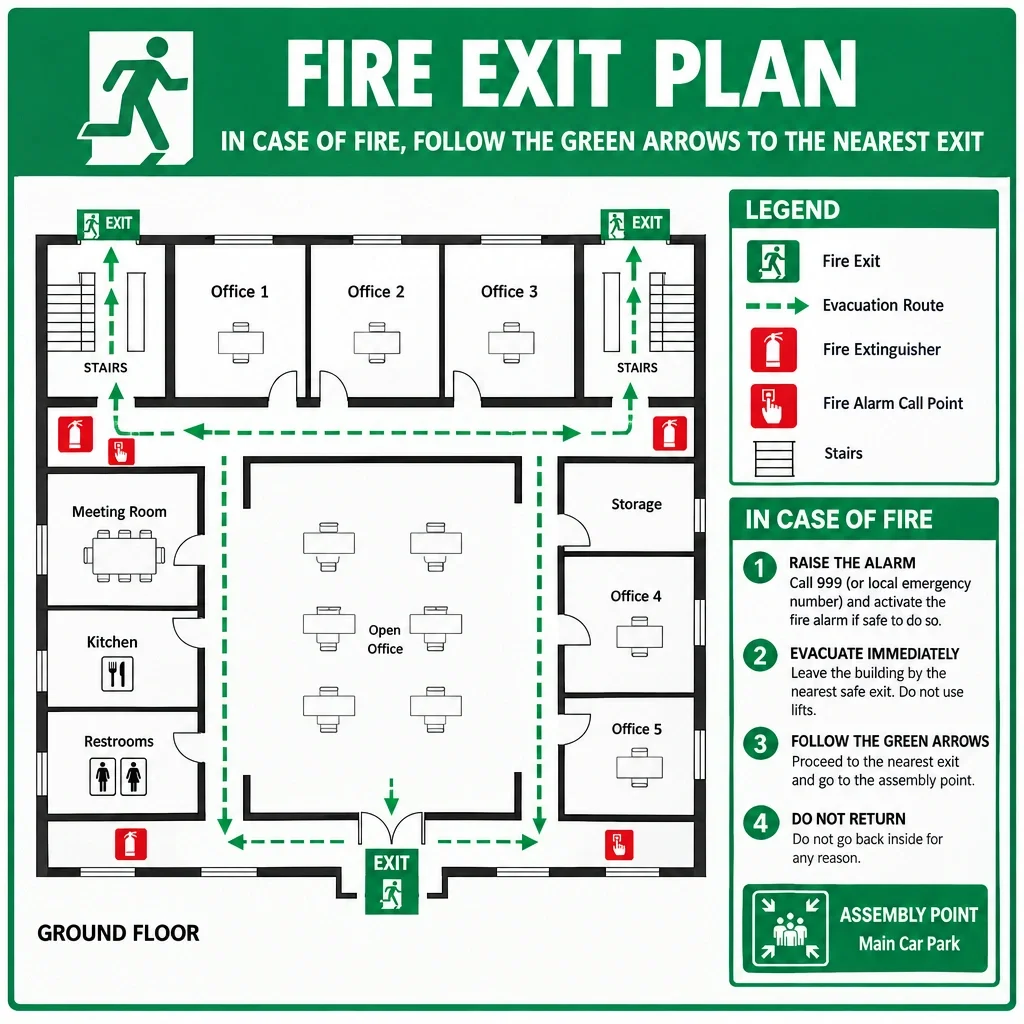
A clear exit on a plan is not enough if the route is blocked, poorly lit or difficult to open. Walk the escape routes people would actually use, from occupied rooms to a place of safety. Check for stored items, locked or obstructed doors, unclear signs and changes in layout that could delay evacuation.
Review whether people can receive a warning and respond in time. Consider the building’s fire detection and alarm arrangements, emergency lighting, signs and firefighting equipment in the context of its layout and use. Record any gaps, and check maintenance information alongside what you observe on site.
Include fire doors and other fire separation measures where they are relevant to the premises. Note visible damage, faults or conditions that could undermine their intended function, and identify when further assessment is needed. Our fire door assessments examine doors’ compliance and functionality, while compartmentation surveys identify weaknesses in fire separation.
A useful fire safety checklist connects each precaution to the risk it is meant to control. For example, an exit route check should consider whether people can keep it clear during normal operations, not only whether it was clear during one inspection. Record who is responsible for routine checks and where faults should be reported.
Turn findings into assigned actions and reviews
For every significant finding, state the action needed, who is responsible and when it should be completed. Prioritise issues that leave people exposed to immediate danger. Keep the action specific enough to check later; for example, name the obstructed route and state who must remove the stored materials.
Keep the assessment, action plan and emergency arrangements connected. Staff need to know what to do if a fire occurs, while the person managing fire safety needs to know whether required precautions are being maintained. Record relevant testing, maintenance, training and review activity so that open actions do not disappear from view.
Review the assessment when a significant change affects the premises or its risks. Examples include changes to the layout, occupancy, activities, storage or equipment, as well as a fire or near miss. The 2026 guidance from Buckinghamshire Fire and Rescue Service describes the assessment as a working document to support action and review, rather than paperwork to file away.
For organisations in Dover, Maidstone, Brighton and other parts of Kent and Sussex, our fire risk assessments are tailored to premises and business needs. A competent assessment should explain what was found and help you identify practical fire prevention and safety actions.
Make your checklist practical
A fire risk assessment checklist is most useful when it reflects the people, activities and layout of your premises, and links findings to clear responsibilities. Walk the building, verify that precautions work in practice, record specific actions and review the assessment when circumstances change. This approach applies whether you manage premises in Canterbury, Eastbourne or elsewhere across Kent, East Sussex and West Sussex.
Arrange a Fire Risk Assessment in Kent and Sussex
If your checklist reveals unresolved hazards, unclear responsibilities or questions about whether existing precautions suit your premises, an on-site assessment can help you understand what needs attention. Our consultants tailor fire risk assessments to the premises and the organisation’s requirements.

In 2026, our fire risk assessment prices start at £130.00. We also provide fire door assessments and fire compartmentation surveys. To discuss your premises and confirm the assessment scope, explore our fire risk assessment services.
Frequently Asked Questions
What should a fire risk assessment checklist include?
Include the premises and assessment scope, people who could be at risk, fire hazards, existing precautions, emergency arrangements and actions required. Record who is responsible for each action and when it should be reviewed.
Is a fire risk assessment template enough to meet requirements?
A template can help you organise information, but it does not assess the premises for you. Your assessment should reflect the building, its activities, occupants and actual fire precautions.
Who is responsible for a fire risk assessment?
Responsibility depends on who has control of the premises and the applicable fire safety duties. If duties are shared, clarify who manages each area and coordinate arrangements that affect other occupants.
When should you review a fire risk assessment?
Review it regularly and when a significant change affects the premises or its risks. Changes to layout, occupancy, activities or storage, and a fire or near miss, are reasons to check whether it remains suitable.
Can Kent and Sussex FRA carry out a fire risk assessment?
Yes. We provide tailored, on-site fire risk assessments for businesses, property managers and other organisations across Kent, East Sussex and West Sussex.


Comments